✔ Competitive Pricing ✔ Quality Service ✔ Extensive Stock ✔ Experienced Staff




 01726 828 388

Reset Filter
 Price
PriceBasic Guide to Planer Thicknessers
A Guide to Planer Thicknessers
A planer thicknesser is one of the most useful machines in a woodworking workshop. It allows timber to be straightened, flattened and brought to an accurate, consistent thickness. Whether you are a furniture maker, joiner, cabinet maker or serious hobbyist, a planer thicknesser can transform rough-sawn timber into high-quality stock ready for use.
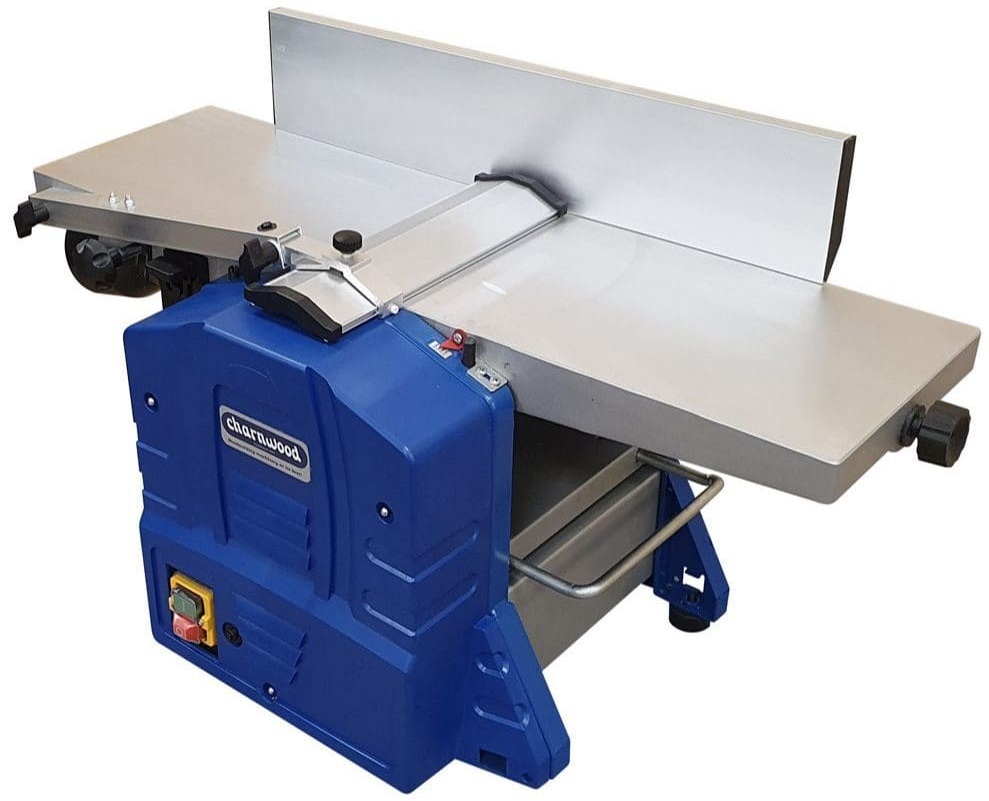
A planer thicknesser combines two machines into one:
* Planer (Surface Planer): used to flatten one face of a board and square one edge.
* Thicknesser: used to machine the timber to a precise thickness while keeping the opposite faces parallel.
Most machines switch between these two functions by lifting or folding the planer tables.
Why Use a Planer Thicknesser?
When buying timber, rough-sawn boards are usually cheaper than pre-prepared timber. A planer thicknesser allows you to:
* Buy lower-cost rough-sawn timber.
* Create custom sizes unavailable from merchants.
* Correct warped or twisted boards.
* Produce more accurate joinery.
* Improve the quality of finished projects.
Many woodworkers find that a planer thicknesser quickly pays for itself through timber savings alone.
Common Machine Sizes
Planer thicknessers are typically classified by the width they can machine.
***
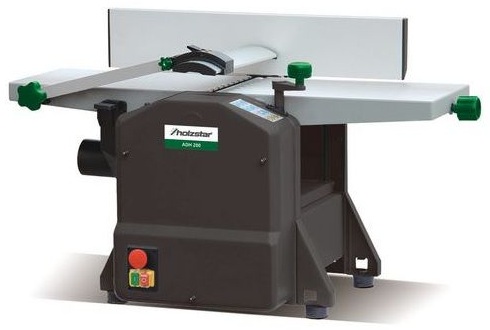
200 - 260mm Machines
Suitable for: Small workshops, hobby users and general furniture work.
Advantages: Lower cost, smaller footprint and easier to move.
Limitations: Cannot handle very wide boards.
Examples include many entry-level and mid-range workshop machines.
***
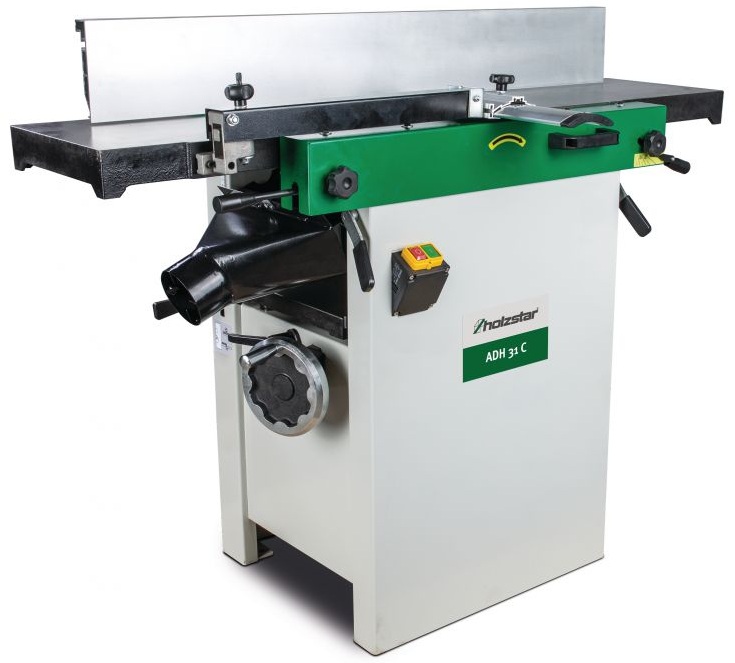
300 - 320mm Machines
Often considered the sweet spot for serious woodworkers.
Suitable for: Furniture making, cabinet work and small commercial workshops.
Advantages: Good capacity, handles most hardwood boards and more powerful motors.
***
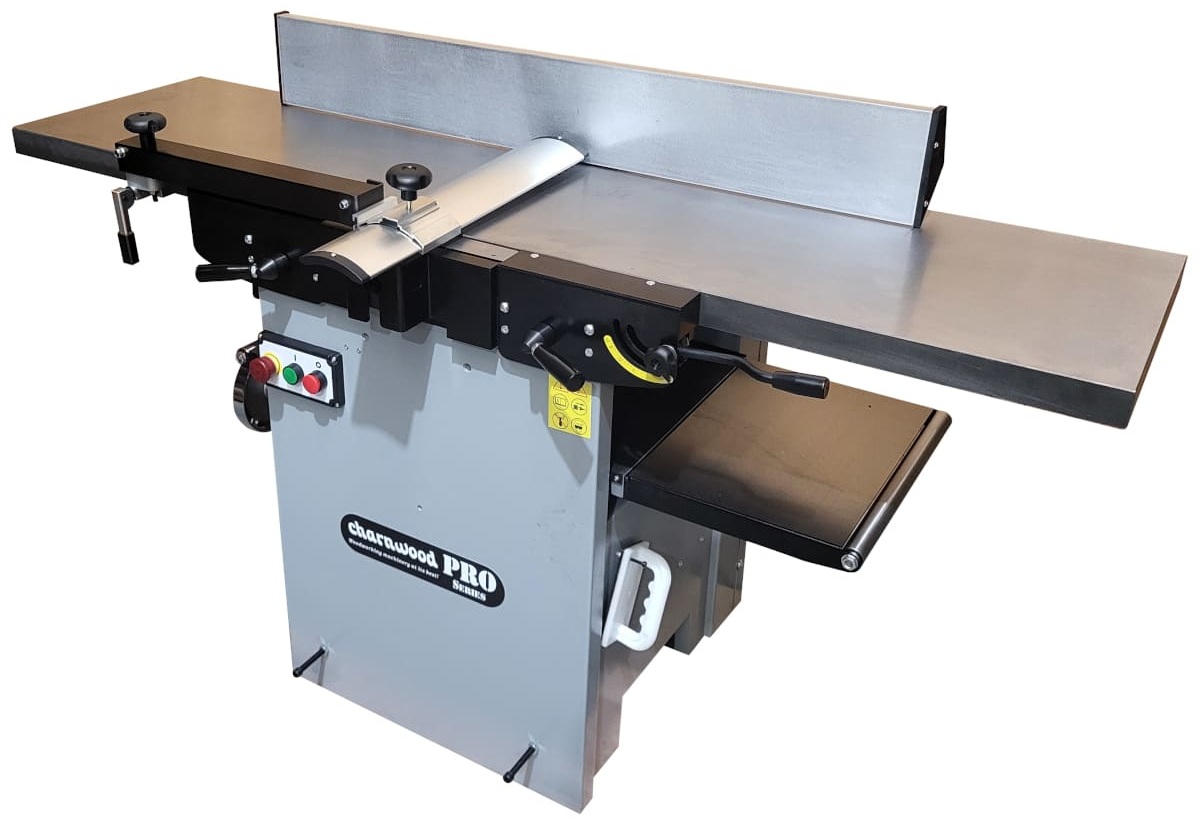
400mm and Larger Machines
Designed for professional workshops.
Suitable for: Production work, large furnitureand wide slab processing.
Advantages: Greater width capacity, heavier construction, higher feed rates and better stability.
Cutterblocks
The cutterblock contains the knives that remove material from the timber.
Traditionally, planer thicknessers use straight knives, but spiral cutterblocks have become increasingly popular.
Traditional Straight Knife Cutterblocks
Most conventional machines use two, three or four long steel knives mounted across the width of the cutterblock.
Advantages: Lower purchase cost, easy to understand, good finish when knives are sharp.
Disadvantages: Noisier operation, knife changes can be time-consuming, more prone to tear-out on difficult grain, entire knife must be replaced or sharpened if damaged.
Spiral Cutterblocks
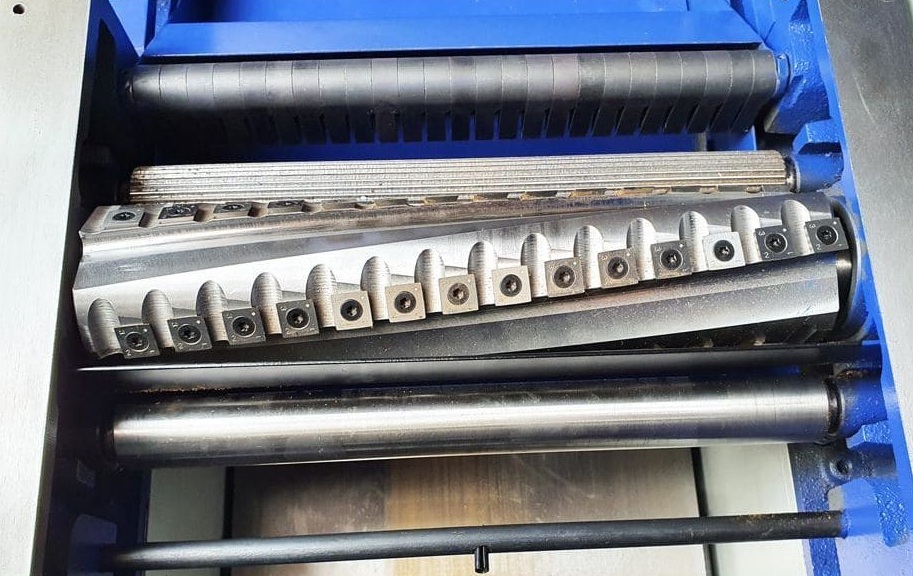
A spiral cutterblock uses many small carbide inserts arranged in a helical (spiral) pattern around the cutterblock. Each insert contacts the wood at a slight angle rather than striking it straight across. Although often called a 'spiral' cutterblock, many designs are technically helical or segmented cutterblocks. The cutting action differs significantly from traditional straight knives, as instead of one long blade cutting the entire width of the board, numerous small inserts make staggered cuts.
Advantages: Reduced tear-out, quieter running, easier maintenance and longer service life.
Disadvantages: Higher purchase price, more expensive replacement inserts, slightly slower material removal in some situations, more inserts to clean and maintain.
For most serious woodworkers, however, the advantages often outweigh the additional cost.
No items in this category