✔ Competitive Pricing ✔ Quality Service ✔ Extensive Stock ✔ Experienced Staff





 01726 828 388


 Price
PriceBandsaws - A Guide
Bandsaws
A comprehensive and beginner-friendly guide to woodworking bandsaws.
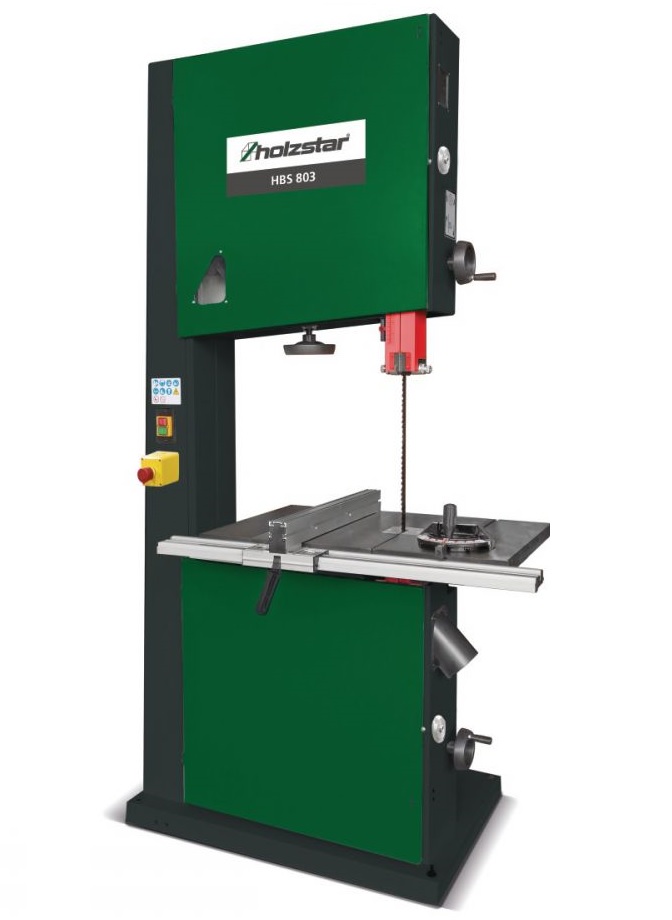
How does a bandsaw work?
The blade is a long, narrow metal band with teeth on one edge which run vertically, moving downward through a flat table. An electric motor drives the wheels that keep the blade moving and tensioned. You simply push the wood gently into the blade to cut it.
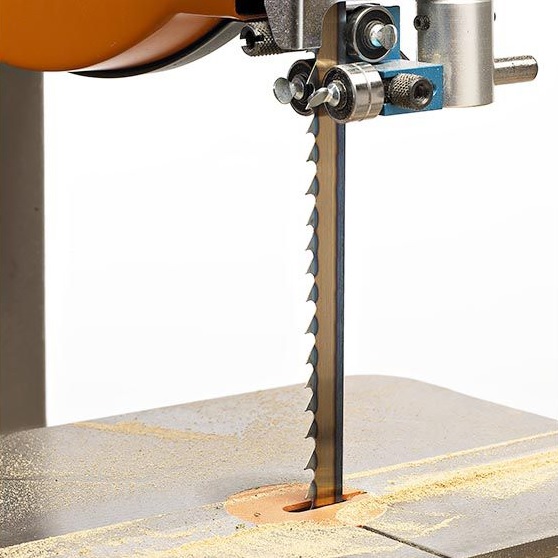
Why is a bandsaw important to woodworkers?
It cuts curves and complex shapes accurately.
It can resaw timber.
Resawing means slicing a thick board into two or more thinner boards or veneers. This is one of the most important reasons woodworkers rely on a bandsaw. Because the bandsaw blade has a thin kerf, it removes less wood, which maximises yield from expensive timber, reduces waste and allows book‑matched panels and veneers. (Many other saws struggle or are unsafe when cutting tall, thick boards vertically.)
It is safer for many cuts.
It handles thick and awkward stock easily.
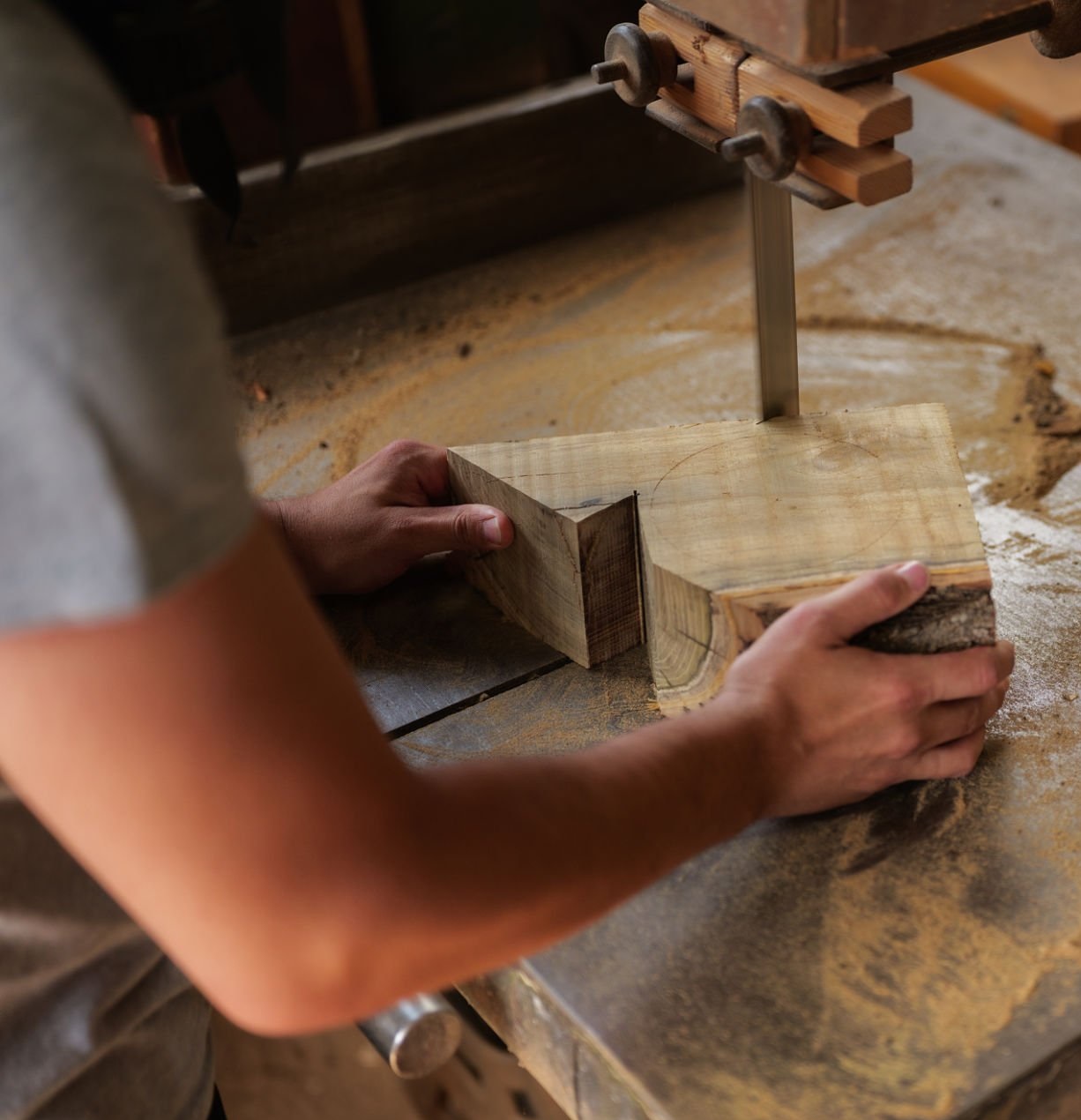
A bandsaw can cut thick, tall, or irregularly shaped wood that would be difficult to control on other machines. This is why woodworkers use it for rough-sawn timber, live‑edge boards, and for turning blanks for bowls and spindles.
It reduces waste and saves money.
Because the blade is thin, the bandsaw produces less sawdust, cleaner cutsand more usable wood from each board. Over time, this matters a lot, especially when working with hardwoods.
It is extremely versatile.
A single bandsaw can perform tasks normally spread across multiple tools, including: straight ripping, curve cutting, joinery cuts (tenons, dovetails), template work, timber breakdown. This makes it especially valuable in small workshops where space matters.
It supports both rough work and fine work.
Woodworkers often use a bandsaw early in a project to rough‑cut parts, then later for fine shaping, delicate components, decorative details. It bridges the gap between brute-force cutting and precision craftsmanship.
Bandsaw Sizing Explained
Understand what “bandsaw size” really means.
The two measurements that matter most.
Buy the largest bandsaw you can reasonably fit and afford — but don’t jump sizes unless you truly need the capacity. This advice appears consistently in woodworking buying guides because most people outgrow small saws, but rarely regret a well‑chosen mid‑size one.
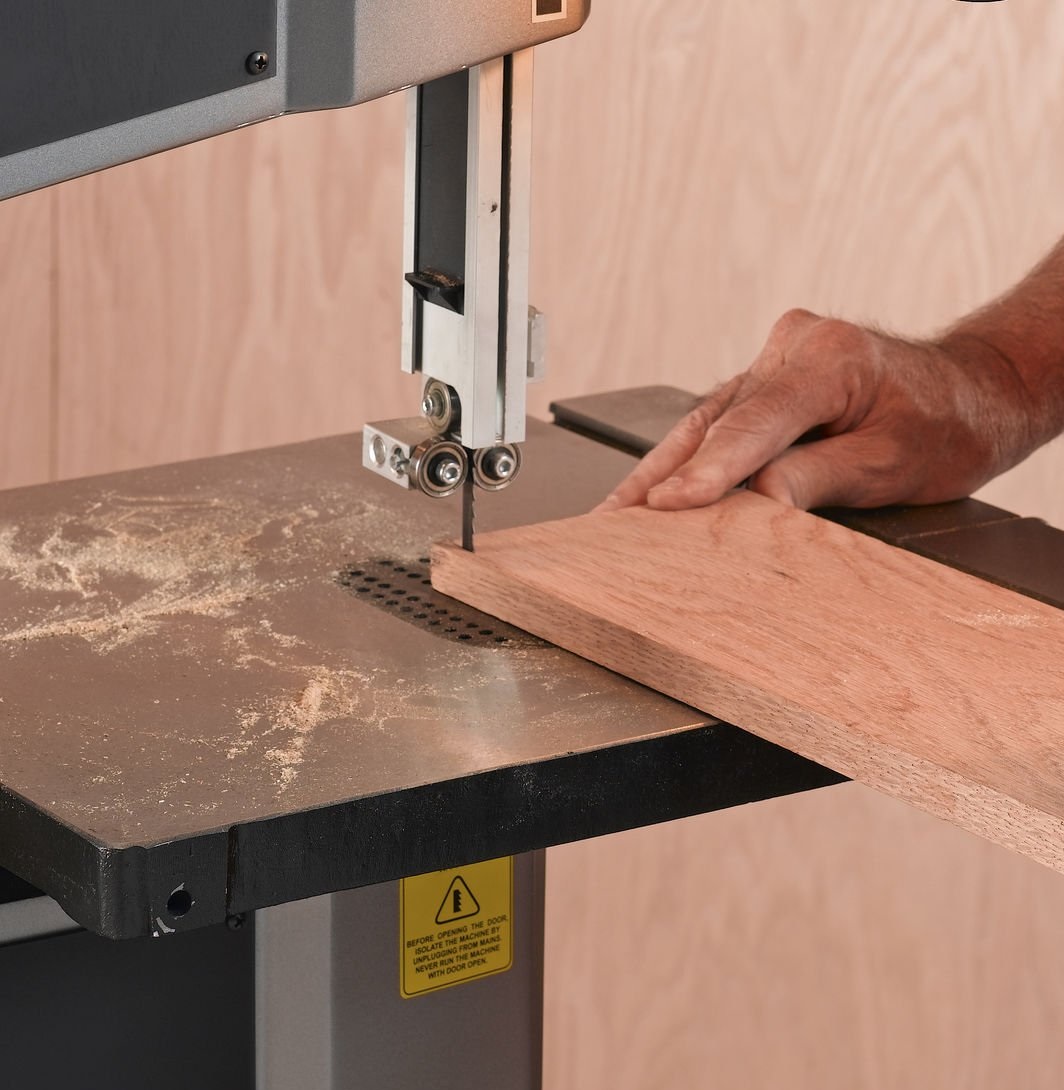
Which size bandsaw do you need?
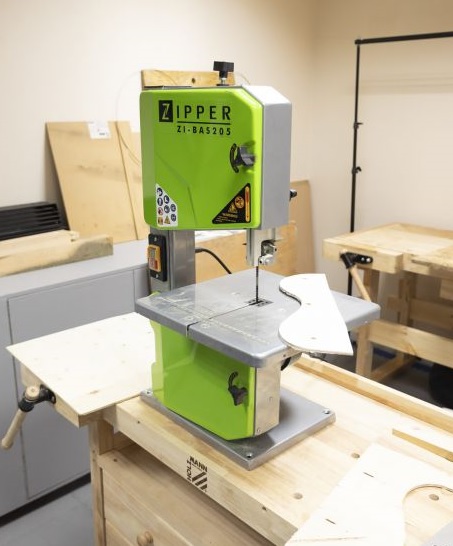
9 - 10 Inch Bandsaw
* Quickly outgrown by most woodworkers
***
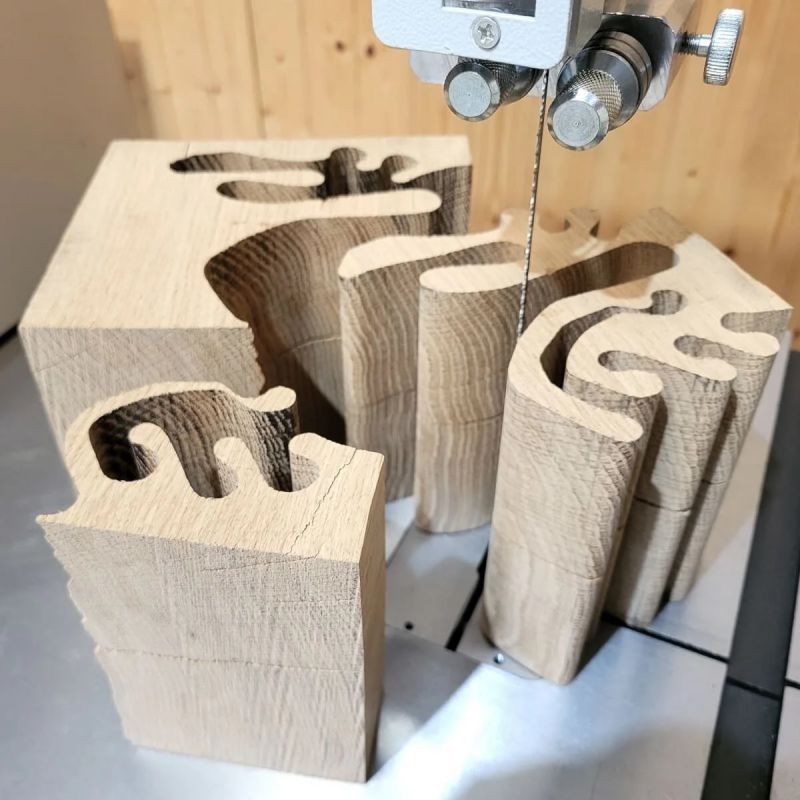
12 - 14 Inch Bandsaw
***
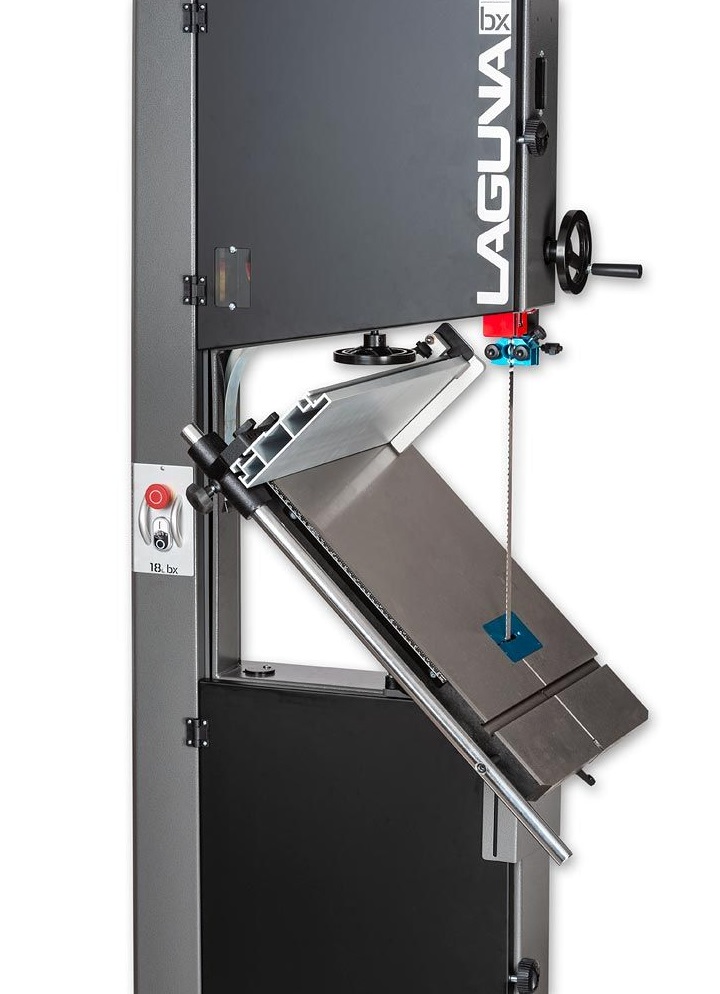
16 - 18 Inch Bandsaw
* Needs more space and budget
***
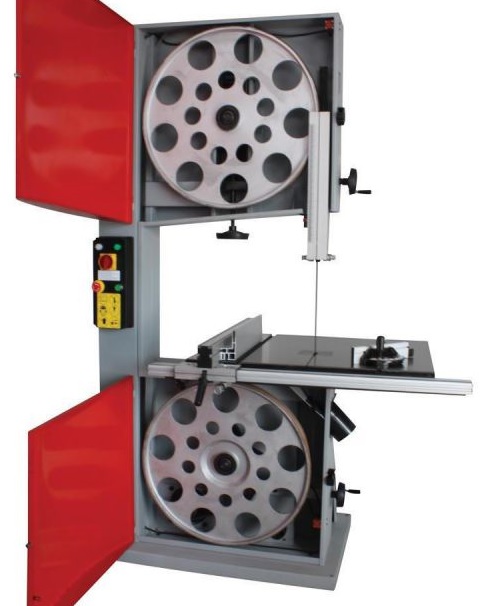
20 Inch or Larger Bandsaw
See our full range of woodworking bandsaws
If you need some help choosing a bandsaw, feel free to contact us on 01726 828388 or email us at info@machinery4wood.co.uk.